Real estate promo video: selling a life, not square metres
How to build a real estate promo video: showing a life before the building is finished, formats for sales offices, web and Reels, and the honesty rule.
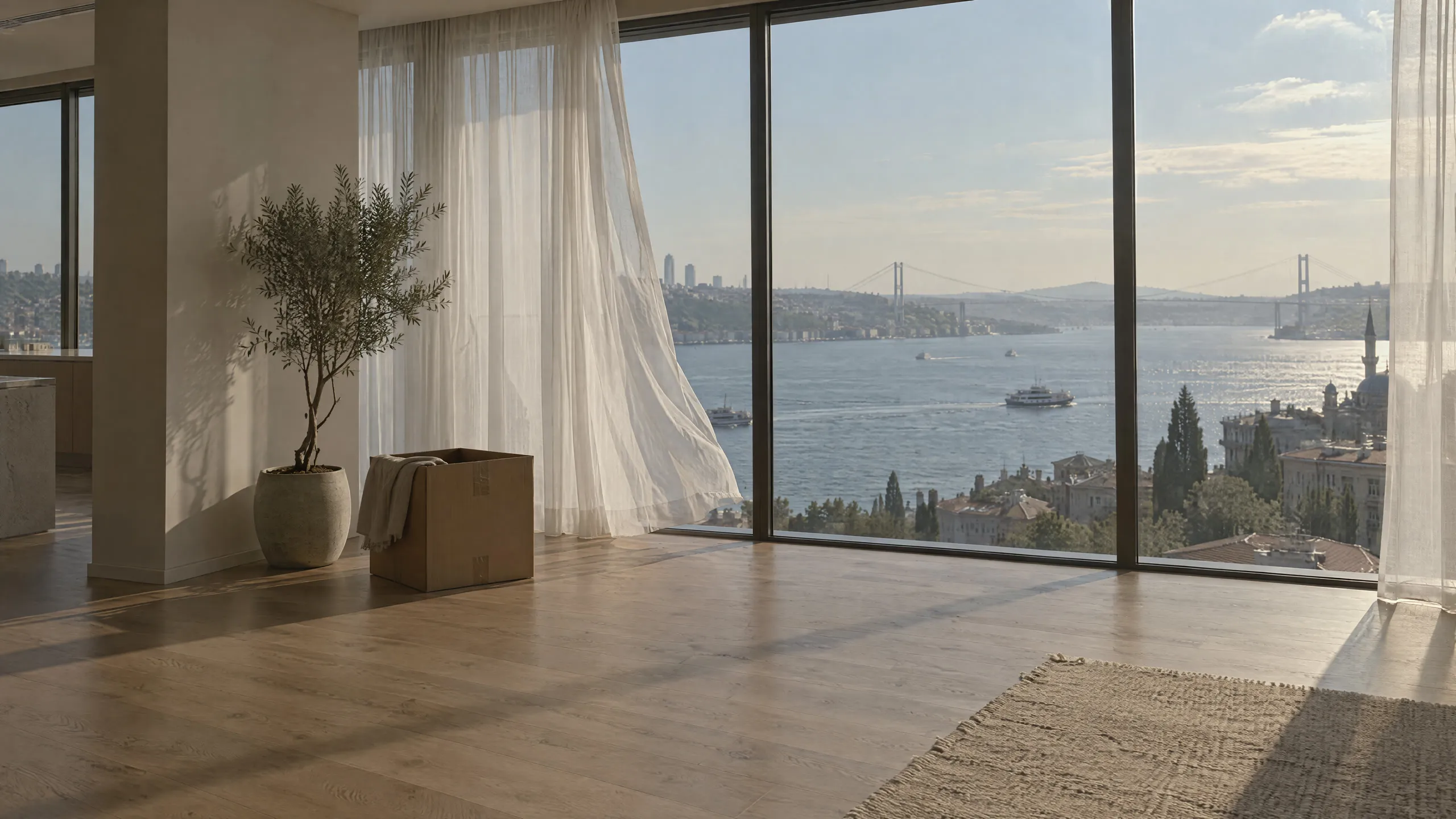
What does a real estate promo video sell?
A good real estate promo video doesn’t sell square metres; it tells a way of living. Buyers read the floor plan in the brochure and talk price in the sales office. What they want from the film is something else: how the morning light falls across the living room, an hour on the balcony in the evening, a Sunday with children running in the garden. A good property film lets them live that life for a minute before they decide.
For new developments the need is even greater. Many projects start selling while the building is going up, sometimes before the foundations are laid. There is no flat to walk through, only a construction site. The film shows, as a feeling, what the buyer cannot see yet.
Showing a life before the building is finished
The classic toolkit usually has three parts: a 3D-rendered virtual tour, drone footage of the plot, and stock footage. The render shows the building, but nobody lives in it. Stock footage has people in it, but they don’t belong to your project.
An AI-made film fills that gap. Characters, seasons and times of day come into the scene without building a set or waiting for a shoot day. A family’s first evening in the new home, a child looking out of the window on a winter morning, a couple who spend their years on the same street: each is built from a one-sentence idea. Changes are made frame by frame, not with a reshoot.
But there is a limit, and it is not negotiable.
The honesty rule: atmosphere is free, facts are real
The flat, the view, the materials and the amenities in the film can never be shown as something they are not. AI carries the atmosphere and the story; the project’s real specifications come from the developer and are stated separately in the film.
| Element | How it appears in the film | Where it comes from |
|---|---|---|
| Light, season, mood | Built freely | Script |
| Characters and everyday scenes | Clearly fictional | Script |
| View | Only the view the project actually has | On-site footage or an approved photo |
| Floor plan, rooms, gross and net area | Never generated; shown as text | The developer’s approved documents |
| Materials and fittings | Only what is in the specification | Technical specification |
| Pool, gym, landscaping | Only if the project really has them | Approved project |
| Price and completion date | Never promised in the film | Sales contract and brochure |
This separation protects both the buyer and the brand. We’re based in Istanbul: in Turkey, commercial advertising falls under Article 61 of Consumer Protection Law No. 6502, and the Advertising Board at the Ministry of Trade can stop misleading ads and impose fines. In 2018 the Ministry asked online real estate ads to show prices in Turkish lira and to state the gross and net area of the unit. Rules differ by country; check your project’s obligations with your legal adviser.
At Cinela every film is delivered clearly labelled as AI-made, and AI content is never passed off as real. We explain how viewers spot the difference in how to tell if a video is AI-generated.
Example: “Moving Day”
“Moving Day”, our real estate sample film, is Cinela’s own study, not client work. It opens on a chaotic moving morning in a cramped flat: toppling boxes, a sofa that won’t fit through the door, an anxious dog. Every mishap turns into a calm moment in the new home over the Bosphorus.
There isn’t a single square metre or floor plan in the film. What it tells is a transition: from a cramped life to a spacious one. Its most memorable moment says it all: a couple sitting on the floor among the boxes, their dog, and the Bosphorus behind them.
Because the sample isn’t tied to a real project, both the home and the view are fictional. For a real development, the same idea would be built with the view the project actually has and approved interior details. Watch the film on the home page.
Formats for the sales office, the website and Reels
Planning the cuts from the start saves the cost of separate edits later.
| Placement | Aspect ratio | Length | Watch out for |
|---|---|---|---|
| Sales office screen | 16:9 | 30–60 s, looped | Must make sense with the sound off; 4K on request for large screens |
| Website and project page | 16:9 and 1:1 | 30 s | A short loop at the top, the full film further down |
| Reels, TikTok, Shorts | 9:16 | 15–30 s | A hook in the first second, always subtitles |
| Trade fairs and presentations | 16:9 | 30–60 s | Noisy rooms; the picture has to tell the story alone |
The Commercial package already includes 16:9, 9:16 and 1:1 cuts. For a regular social presence a Social Series fits; to tell a project’s story across its whole sales period, a branded series may suit better.
Process and price
No step goes ahead without your approval. On day one, in a brief of about 20 minutes, we talk through the idea and also ask for the project’s approved information: plans, photos of the view, the materials list and the amenities list. On day two the script and shot list arrive. On days three and four every scene is framed; when you approve the frames, we suggest checking each one against the project’s real details. On day five music, sound and edit are added. With revisions, a commercial is delivered in 7 business days.
| Package | Price (excl. VAT) | Use for a development |
|---|---|---|
| Social Series | $990 / pack | 3 vertical videos × 15 s; pre-launch teasers and announcements |
| Commercial | $1,990 / film | 30 s master film, three cuts, original score, 2 revisions, full usage rights |
| Branded Series | $5,900 / season | 5 episodes × 60–90 s; a story that runs across the sales period |
Full package details are on our AI commercials page.
A checklist before you start
- Are the approved facts in writing? Room count, gross and net area and completion date should come from the developer in writing.
- Is the view real? The view in the film should match the view the project actually has.
- Does the project really have everything shown? Materials, fittings and amenities should be checked against the specification.
- Is the label visible? “Made with AI” and, where needed, “Images are illustrative” should appear in every cut.
- Are the faces cleared? If you use your own actor or brand face, you must hold the usage rights.
- Are the cuts decided? Formats for the sales office, the web and social should be agreed at the start.
- Who signs off the final cut? Your legal team should see it alongside your sales team.
When you’re ready, describing your project in one sentence on the quote form is enough.
Sources
- Real estate
- Promo video
- AI video
- Honesty
More articles
All articles →-

Hotel promo video: what to show, where it runs and when to make it
What should a hotel promo video show, which format fits each channel, and when should it be ready? AI production, when real footage is a must, and a checklist.
Read -
What is a vertical drama? How micro-dramas work and why brands care
What is a vertical drama, how is an episode built, and why are brands paying attention? Hooks, short episodes, cliffhangers, AI production and a checklist.
Read