What is a vertical drama? How micro-dramas work and why brands care
What is a vertical drama, how is an episode built, and why are brands paying attention? Hooks, short episodes, cliffhangers, AI production and a checklist.
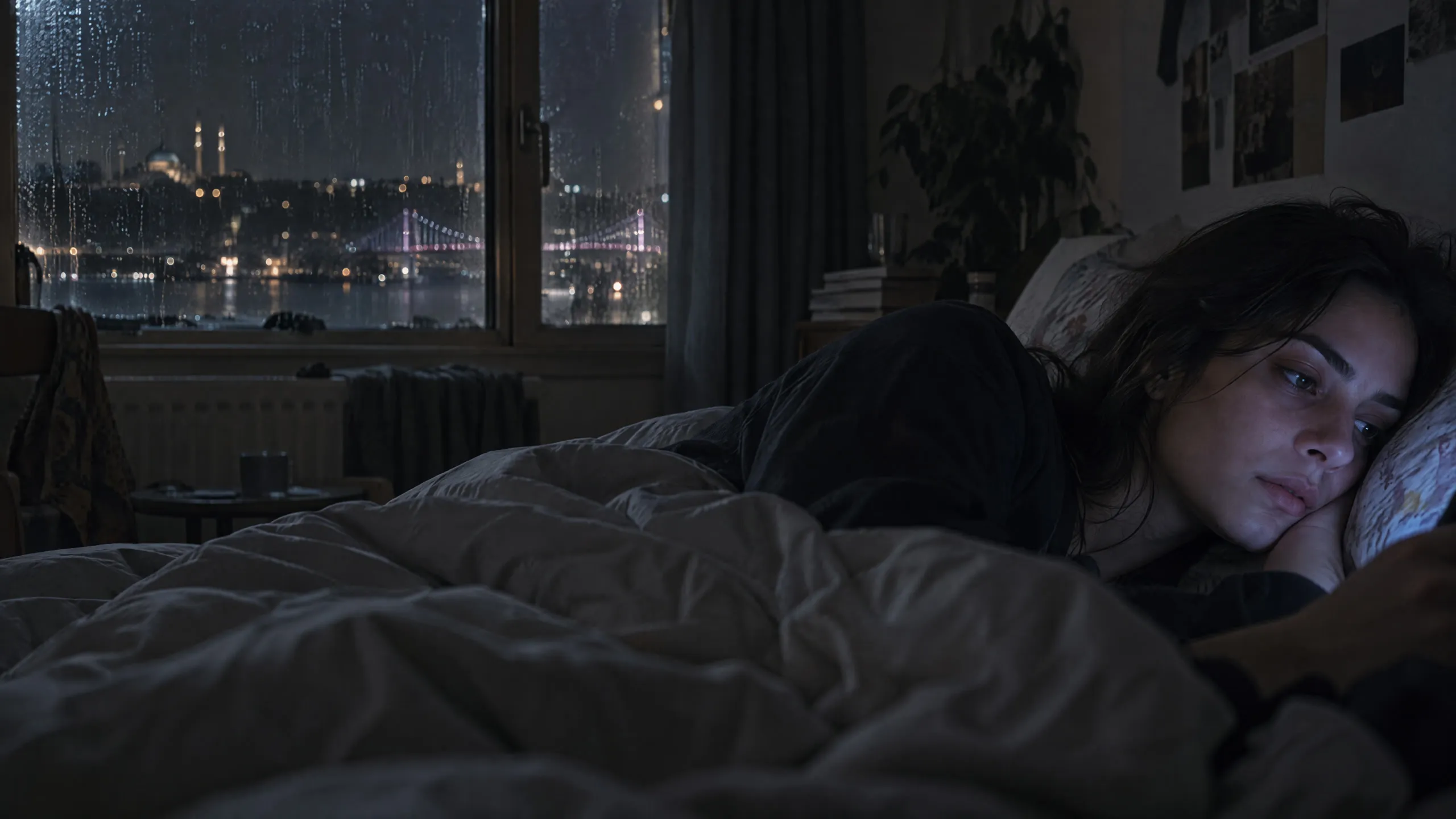
What is a vertical drama?
A vertical drama is a series you watch without turning your phone sideways, the way you already hold it. The picture is framed in 9:16, the episodes are short and the story moves fast. You will also see it called a micro-drama, a microdrama or a short drama.
The format was born in China, where these productions are known as “duanju”, or short dramas, and grew into a large industry within a few years. According to the U.S. International Trade Administration, the China Netcasting Services Association expected the Chinese micro-drama market to reach 50.44 billion yuan in 2024, which would put it ahead of the country’s film box office (47 billion yuan) for the first time.
Apps such as ReelShort and DramaBox carried the model abroad. A single story can run from 20 to 100 episodes; usually the first episodes are free and the rest unlock with per-episode payments, a subscription or ads. In Turkey, where we’re based, local productions such as “Yeni Nesil Aile” on the BMAG platform have started to appear.
| Traditional series | Vertical drama | |
|---|---|---|
| Screen | Horizontal (16:9), TV or streaming | Vertical (9:16), phone |
| Episode length | Long | Usually 1–3 minutes |
| Pace | Scenes build slowly | One event per episode, quick cuts |
| Framing | Wide shots, crowded scenes | Close-ups, one face |
| When people watch | Set-aside time, sitting down | In the feed, in short breaks |
How is an episode built?
The language of a vertical drama has three parts. The examples below come from Cinela’s own thriller series; it is not client work, but a production we made to test the format.
| Part | What it does | Example from our series |
|---|---|---|
| Hook | Stops the viewer in the feed within the first second | The neighbour who comes down at the same hour every night doesn’t come down tonight. |
| One event | Moves the story one step forward; one conflict per episode | Kemal, the doorman, finds an envelope with his own name on it. |
| Cliffhanger | Leaves the question open and calls for the next episode | On the roof at night, Kemal backs towards the edge; a hand appears behind him. |
Three more rules help:
- Close-up, one face. Crowded scenes get lost on a vertical screen; emotion reads from the face.
- Subtitles are part of the episode. Sound isn’t always on in the feed.
- Short, not cramped. Instagram Reels and YouTube Shorts now accept videos up to three minutes long, so a 60–90 second episode fits comfortably in the feed.
You can see the first-episode shot lists of our two series in the Works section on the home page.
Why are brands paying attention?
An ad is seen once; a series brings people back. Viewers choose the next episode themselves, and the time they spend with the brand adds up episode by episode.
The format gives a brand three things:
- An audience that returns. The cliffhanger gives people a reason to come back to the brand’s account.
- A world without ad breaks. The product appears as a place, an object or the theme of the story.
- A steady publishing rhythm. A five-episode season means five separate posts spread over several weeks.
The U.S. International Trade Administration’s report on the Chinese market notes that brands use micro-dramas as a new way to drive traffic and engagement. There are examples in the US too: in December 2025, Native, the personal care brand marketed by P&G, announced a 50-episode microdrama. The link to the product sits in the story’s theme rather than on screen.
How can a brand use a vertical drama?
We covered how the product enters the story and what to measure in our branded series guide. Here are the starting steps:
- Test the tone first. The Social Series package (3 vertical videos × 15 s, from $990) is a short way to try a character and a voice in the feed.
- Then build a season. The Branded Series package is 5 episodes × 60–90 s with your own cast and two revisions per episode, delivered in 3–4 weeks, from $5,900. All packages are in the pricing section.
- Say clearly that it’s an ad. The ICC Advertising and Marketing Communications Code says marketing communications should be easily identifiable in any format. In Turkey, consumer law treats brand elements shown promotionally without disclosure as covert advertising and bans it. Every episode should show that the series is a brand production.
What does AI production change?
The hard part of a vertical drama is volume: many episodes, many locations, always the same faces. In a traditional shoot, every new location means a new permit and a new shoot day. With AI, an apartment corridor, a rooftop at night or a rainy cemetery is made without building a set. A scene you don’t like isn’t reshot; that frame is changed. Rewriting the end of episode two after seeing how episode one landed doesn’t need a new shoot day either.
Some things don’t change. Script, direction and edit are human work, and each episode’s script, frames and edit are approved separately. The most critical issue is character consistency: Kemal’s face in the first episode has to be his face in the last. If you want to work with your own actor, a photo or a video is enough; you must hold the usage rights.
At Cinela every episode is delivered clearly labelled as AI-made. Meta may also require an AI label on photorealistic video on Instagram and Facebook. We explain how AI video can be recognised in a separate article.
A checklist before you start
- Does the story fit in one sentence? If not, the episodes will drift.
- Is the first episode’s hook in the first second?
- Does every episode end on a question?
- Are the characters and faces fixed? If a real actor is involved, permissions should be in writing.
- Where does the brand sit in the story? As a place, an object or a value; not as an ad break.
- Are the labels clear? Advertising and AI disclosure should appear in every episode.
- Is the publishing plan ready? Spacing between episodes, cover frames, subtitles.
A one-sentence idea is enough to start; write to us through the quote form.
Sources
- U.S. International Trade Administration: China Entertainment, Micro-drama Industry
- Wikipedia: Microdrama
- Milli Gazete: What is a vertical series, its format and features (in Turkish, September 2026)
- Marketing Dive: P&G’s Native to debut 50-part microdrama series (December 2025)
- YouTube Help: Understand three-minute YouTube Shorts
- Social Media Today: Instagram officially expands Reels length to 3 minutes (January 2025)
- ICC Advertising and Marketing Communications Code (2024), Article 7
- Turkish Consumer Protection Law No. 6502, Article 61 (in Turkish)
- Meta: How to identify AI content on Meta products
- Vertical drama
- Micro-drama
- Branded content
- AI video
More articles
All articles →-
Real estate promo video: selling a life, not square metres
How to build a real estate promo video: showing a life before the building is finished, formats for sales offices, web and Reels, and the honesty rule.
Read -

Hotel promo video: what to show, where it runs and when to make it
What should a hotel promo video show, which format fits each channel, and when should it be ready? AI production, when real footage is a must, and a checklist.
Read