What is branded content? How it differs from advertising, formats and disclosure
What is branded content, and how does it differ from ads, native ads and influencer posts? Formats, what makes it work, and how to disclose a paid partnership.
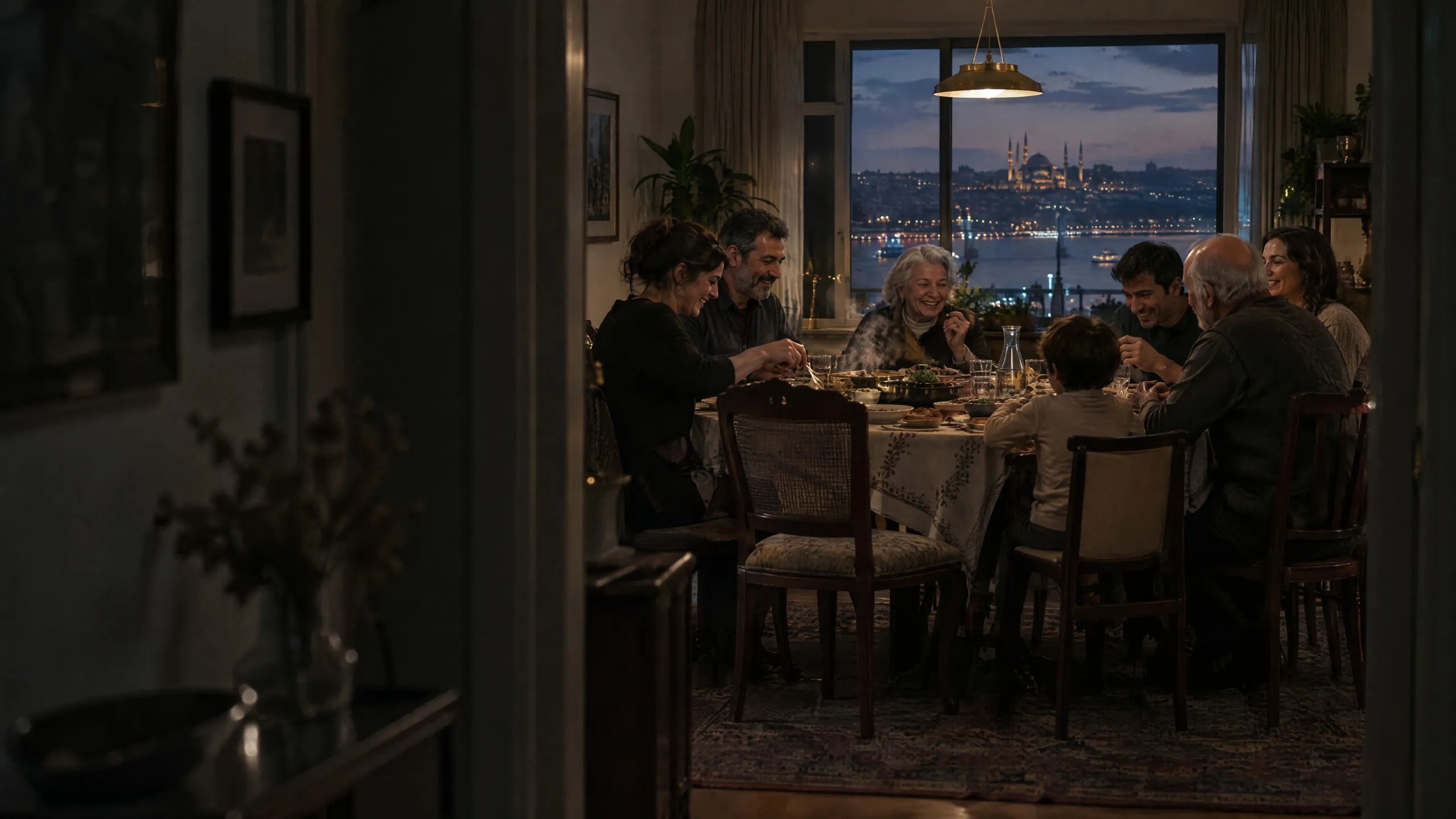
Service AI video production ·Watch the sample film
What is branded content?
Ask what branded content is and the usual answer is “a softer kind of ad”. That definition falls short. In branded content the brand is not the party slipping a message into the break; it is the producer of something worth watching: a short film, an episodic series, or a documentary-style piece about a craft.
The test is simple: do people watch it because it appeared in front of them, or because they want to? Advertising borrows attention; branded content tries to earn it. The product can appear, but it never replaces the story.
Branded content vs advertising, native ads and influencer content
The four are often confused because all of them show up in the same feed, on the same phone. The difference lies in who is speaking and how the viewer meets the content.
| What it does | Where the product sits | How it is disclosed | |
|---|---|---|---|
| Advertising | Talks about the product or campaign directly; interrupts what people are watching | Centre stage | Runs in ad space; its format signals that it’s an ad |
| Native advertising | Paid content that looks like the material around it: an article on a news site, a post in a feed | Usually visible | The more it resembles editorial content, the more a clear disclosure is needed |
| Influencer content | A person recommends a product from their own account, in their own voice | Inside the person’s experience | A clear label such as “ad” with the brand’s name, plus the platform’s partnership tool |
| Branded content | A film, series or documentary-style piece produced by the brand | Inside the story; sometimes not on screen at all | On the brand’s own channel the source is obvious; on someone else’s channel, a paid partnership must be labelled |
The lines blur. A short series a creator makes with a brand is both influencer content and branded content, and the disclosure rules for both apply.
Branded content formats
- Short film. A story with a beginning and an end, watched in one sitting. It tells the brand’s value (trust, courage, belonging) through a character’s choice. The product often sits in a single scene, in a natural place.
- Series. It carries the audience from episode to episode, and the brand returns in each one. We cover season planning and how the product enters the story in our branded series guide, and the rules of the vertical format in our vertical drama article.
- Documentary-style. It tells the story of a craft, a production process or a community. If it portrays real people and real places, it needs real footage; more on that below.
- Social series. A short pattern that repeats every week: the same character, the same question or the same place. Small on its own, a recognisable voice over time.
Three principles that make branded content work
- Story first. A simple test: if you remove the logo, would people still watch? If not, what you have is a long commercial.
- The brand inside the story. The brand settles into the story as a place, an object or a theme, not as a message that interrupts. We walk through these three routes with examples in the branded series guide.
- Consistency. A one-off piece rarely builds a relationship. The same tone, the same characters and a steady publishing schedule give the audience a reason to come back.
Disclosure: how to label a paid partnership
Branded content must not mislead its audience. The rules differ by market; three reference points:
- United States. The FTC asks influencers to disclose any financial, employment, personal or family relationship with a brand, free or discounted products included. The disclosure sits with the message itself, inside the video rather than only in the description, in plain words such as “ad”. The FTC also advises against relying on a platform’s disclosure tool alone.
- Turkey. Consumer protection law bans covert advertising. The Ministry of Trade’s 2021 influencer guide, based on an Advertising Board decision, asks for a label such as #Reklam, #Sponsor or #İşbirliği alongside the advertiser’s name. In video the disclosure is written and spoken, visible without clicking “read more”. The advertiser is responsible too: it must inform the influencer and require compliance.
- Instagram. Instagram treats content made in exchange for money or something else of value, gifts included, as branded content, and asks creators to tag the brand with the “Paid partnership” label.
This is not legal advice; check the current rules and your legal counsel before a campaign. A short checklist before publishing:
- Was there money, a gift or a discount? If so, a label is needed.
- Is the label visible at first glance? It should not sit in the hidden part of a caption.
- Does the brand’s name appear with the label?
- In video, is the disclosure both written and spoken?
- Was the platform’s partnership tool used?
- If it was made with AI, is that clearly stated?
Where AI production fits
The expensive part of branded content is the world of the story: locations, cast, and consistency from one episode to the next. In a traditional shoot every new scene means another shoot day, and the work usually takes 4–8 weeks. With AI there is no set, crew or location permit, and changes are made frame by frame rather than with a reshoot.
At Cinela the process moves with your approval: a brief of about 20 minutes on day one, the script and shot list on day two, a frame for every scene over the next two days, and music, sound and edit on day five. No step goes ahead without your approval.
Our own drama series opens the same way: mourners with umbrellas at a rainy funeral, Grace and Adam. It is not client work; it is a production we use to test the format with our own story before proposing it to brands.
There is also a place where AI does not belong: documentary-style content that rests on the testimony of real people. AI-made content should never be passed off as real, and every Cinela film is delivered clearly labelled as made with AI. The platforms are moving the same way: Meta adds an “AI info” label to content it detects as AI-generated or that people disclose as such. We explain how to recognise AI video in a separate article.
Starting prices (excl. VAT): Social Series $990 / pack, Branded Series $5,900 / season. All packages are in the pricing section. If you’re not sure which format suits your brand, we can work it out together through the quote form.
Sources
Rules checked in October 2026; see the source for the current text.
- FTC: Disclosures 101 for Social Media Influencers
- FTC: Native Advertising: A Guide for Businesses
- Turkey’s Consumer Protection Law No. 6502, Article 61 (in Turkish)
- Turkish Ministry of Trade: influencer guide announcement (in Turkish)
- Influencer guide, full text (in Turkish, hosted by IAB Türkiye)
- Instagram Help Center: branded content on Instagram
- Meta: our approach to labelling AI-generated content
- Branded content
- Content marketing
- Disclosure
- AI video
More articles
All articles →-

What is a brand film? How it differs from an ad, its structure and cost
What is a brand film, and how does it differ from a commercial, corporate video or branded content? How a good one is built, where it's used, and cost.
Read -
How to write a commercial script: format, structure and an example
How to write a commercial script: the two-column format, a 30-second structure, an original example script, voice-over rules, common mistakes and a checklist.
Read