What is post-production? Edit, colour, sound and delivery, step by step
What is post-production and what are its stages? Editing, colour grading, sound design, music, effects and delivery formats, and where it fits in AI production.
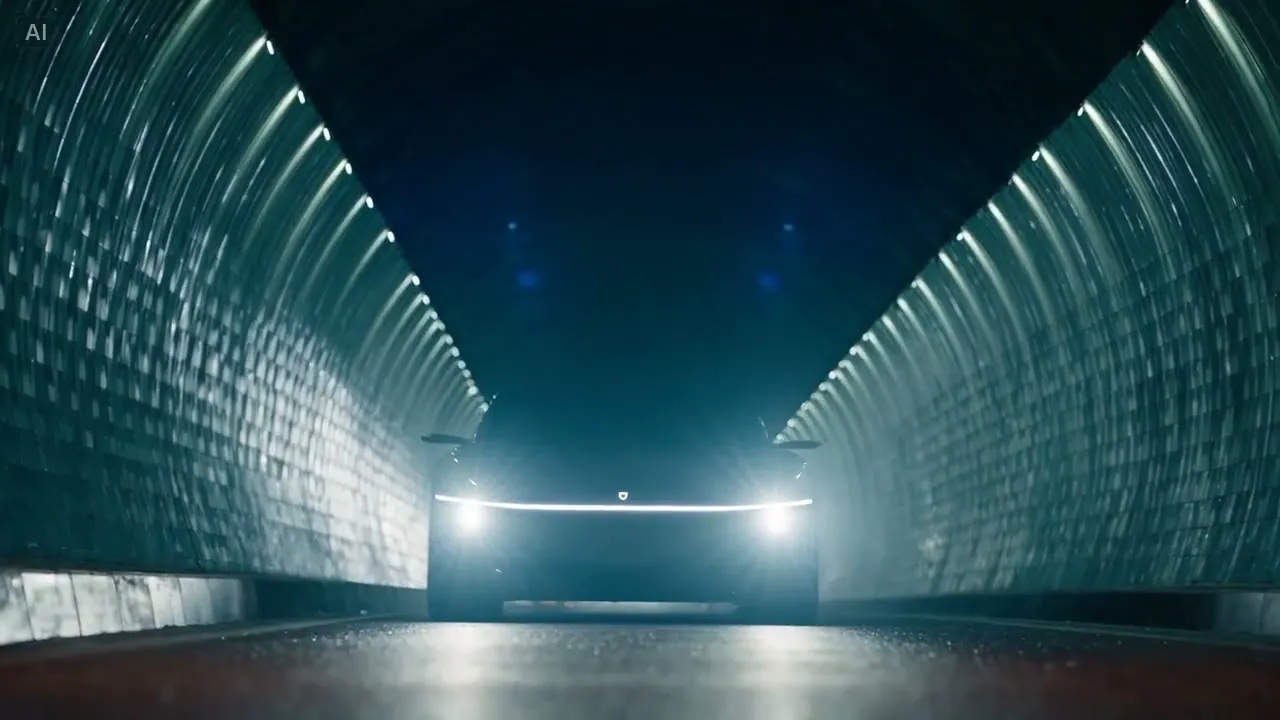
Service AI video production ·Watch the sample film
What is post-production?
A film is made in three stages. Pre-production is preparation: brief, script, storyboard, shot list. Production is where the images are captured; in traditional film-making, that’s the shoot day. Post-production, often just called “post”, turns that footage into a finished film.
| Stage | What happens | Output |
|---|---|---|
| Pre-production | Brief, script, storyboard, shot list, cast and locations | An approved plan |
| Production | Shooting or generating images | Raw footage |
| Post-production | Edit, colour, sound, music, effects, graphics and delivery | A film ready to air |
Raw footage on its own isn’t a film. The same footage can become very different films depending on the edit and the sound. That’s why post-production is often described as the place where a film is written a second time.
What are the stages of post-production?
| Stage | What happens | Who does it |
|---|---|---|
| Editing | Shots are chosen, ordered and cut; the rhythm is built | Editor |
| Colour grading | Shots are matched and the film is given its look | Colourist |
| Visual effects and clean-up | Unwanted details removed, elements added | VFX artist |
| Sound design | Ambience, effects, silences | Sound designer |
| Music | An original score or a licensed track | Composer or music supervisor |
| Voice-over and dubbing | Narration, dubbing into other languages | Voice artist |
| Graphics and text | Logo, tagline, legal copy, subtitles | Graphic designer |
| Mix and delivery | Balancing the sound; files for each channel | Sound and delivery team |
On small jobs one person may take on several of these roles. The order isn’t always linear either: music and sound take shape while the edit is still moving.
Editing: where the film is rewritten
Editing is the backbone of post-production. The editor first makes a rough cut: is the story in the right order, does the length work? Then comes the fine cut: where each cut falls, how long each shot runs, the moment picture and sound meet.
In a commercial, the hardest part of editing is cutting down. A script that reads as 30 seconds on paper often runs long in the edit. A good editor will drop even their favourite shot if they have to. We cover how length relates to channel in our commercial length guide.
Colour: same frame, different feeling
Colour grading does two jobs. The first is technical: it makes shots captured at different times and in different light look like parts of the same film. The second is about storytelling: it sets the film’s mood. Warm, orange tones carry a summer evening; cold, teal tones carry the night and tension.
The cover of this article is a frame from Night, Cinela’s automotive sample film. After the warm street lamps at the start, the tunnel’s teal light suddenly cools the night down. It isn’t client work; it’s a study we made to test the method. To see how the colour shifts from shot to shot, watch Night.
Sound: the invisible half of the film
Viewers rarely notice it, but much of a film’s feeling is carried by sound: a creaking door, rain on asphalt, the moment the music comes in, a silence. Sound design builds these layers one by one; the mix balances them.
Muted feeds need thought too, but this time in text: subtitles if there’s a voice-over, and on-screen text that stays up long enough to read and is short enough to read. Cinela’s sample films have no dialogue; an original score and sound design carry the story.
Music: original or licensed?
Music for a commercial is either composed for the film or licensed from an existing track. Licensed music is quick, but the licence is often limited to certain channels, a certain period and certain territories; if the film moves to TV or the campaign runs longer, the licence has to be renegotiated. There’s also a chance of hearing the same track in another brand’s ad. An original score belongs to that film alone and is written to its edit: the cuts land on the beats, and the music follows the feeling of each scene.
Delivery: which files come out?
The last job in post-production is delivery. A commercial comes out as a package, not a single file:
| Channel | Format | Note |
|---|---|---|
| YouTube, website, digital ads | 16:9 landscape | The main film |
| Reels, TikTok, Shorts | 9:16 vertical | Reframed; text moved into the safe area |
| Instagram and Facebook feed | 1:1 square | A shorter cut |
| Television | To the broadcaster’s technical spec | Loudness and file format vary by channel |
| Muted feeds | Subtitled version | Essential if there’s a voice-over |
A vertical cut isn’t a cropped landscape film. The framing, the placement of text and sometimes the order of shots change, and that’s work for the edit and design.
Revisions: what to change at which stage?
Asking for changes in post-production is normal; the trick is to ask at the right stage. Going back after a stage is approved means redoing everything that came after it.
| Stage | Easy at this stage | Hard after this stage |
|---|---|---|
| Edit | Shot order, length, which shots stay | Swapping shots after picture lock; music and sound have to be refitted |
| Colour | Look, contrast, balance between scenes | Going back to the edit once colour is done |
| Sound and music | Where the music sits, how dense the effects are, voice-over | Changing the voice-over script after the mix |
| Graphics and text | Tagline, legal copy, subtitles | Changing text after delivery; every format is re-exported |
A practical rule: don’t move to colour before approving the edit, or to delivery before approving colour. Lock the legal copy and tagline during the edit; a line of text that changes on the last day reopens all three formats.
How does post-production change with AI?
In AI production there’s no shoot day; the images are generated shot by shot. That brings the three stages closer together: a storyboard frame becomes the film’s own frame, and changing a shot means regenerating it, not reshooting it. We explain where the storyboard sits in this process in what is a storyboard.
But post-production doesn’t disappear. Choosing and ordering shots, building the rhythm, matching colours and writing the music and sound are still a team’s job. Not every generated shot makes it into the film; the edit still picks the best moments.
| Traditional production | With AI | |
|---|---|---|
| Raw footage | Hours of material from shoot days | Shots generated from approved frames |
| A missing or weak shot | An extra shoot day | That shot is regenerated |
| Colour | Matching shots filmed on different days in different light | Matching the generated shots and giving the film its look |
| Sound and music | Separate teams, separate schedules | The same team, the same week |
| Brief to delivery | 4–8 weeks | 5–7 business days |
The traditional timeline is an industry-wide range, not a firm quote.
How does post-production work at Cinela?
At Cinela, post-production isn’t a separate job but the last step of the process: on day 1 a brief of about 20 minutes, on day 2 the script and shot list, on days 3–4 a frame for every scene, and on day 5 music, sound, edit and delivery. You approve the final cut; the files are yours. We describe the full process in our AI commercial production guide.
The Commercial package includes edit and colour, an original score and sound design, 16:9, 9:16 and 1:1 cuts and two revision rounds.
Questions to ask in a post-production quote
- How many revision rounds, and at which stage? After the edit or after colour?
- Is the music original or licensed? If licensed, which channels and how long does it cover?
- Are vertical and square cuts included in the price?
- Who handles subtitles and voice-over?
- Which files will be delivered? Will music and sound come as separate stems?
- Who owns the usage rights, and for how long?
At Cinela the music is original, three formats and two revision rounds are included, and full usage rights pass to you.
If you want one team from pre-production to delivery, the packages and process are on our AI video production page; a 30-second commercial starts at $1,990 (excl. VAT), delivered in 7 business days.
- Post-production
- Editing
- Colour grading
- Sound design
More articles
All articles →-
What is a brand film? How it differs from an ad, its structure and cost
What is a brand film, and how does it differ from a commercial, corporate video or branded content? How a good one is built, where it's used, and cost.
Read -
How to write a commercial script: format, structure and an example
How to write a commercial script: the two-column format, a 30-second structure, an original example script, voice-over rules, common mistakes and a checklist.
Read